
Flu season comes around every year, which means we hear a familiar question at the pharmacy:
“Do I really need to get another flu shot this year?”
For most people, the answer is yes.
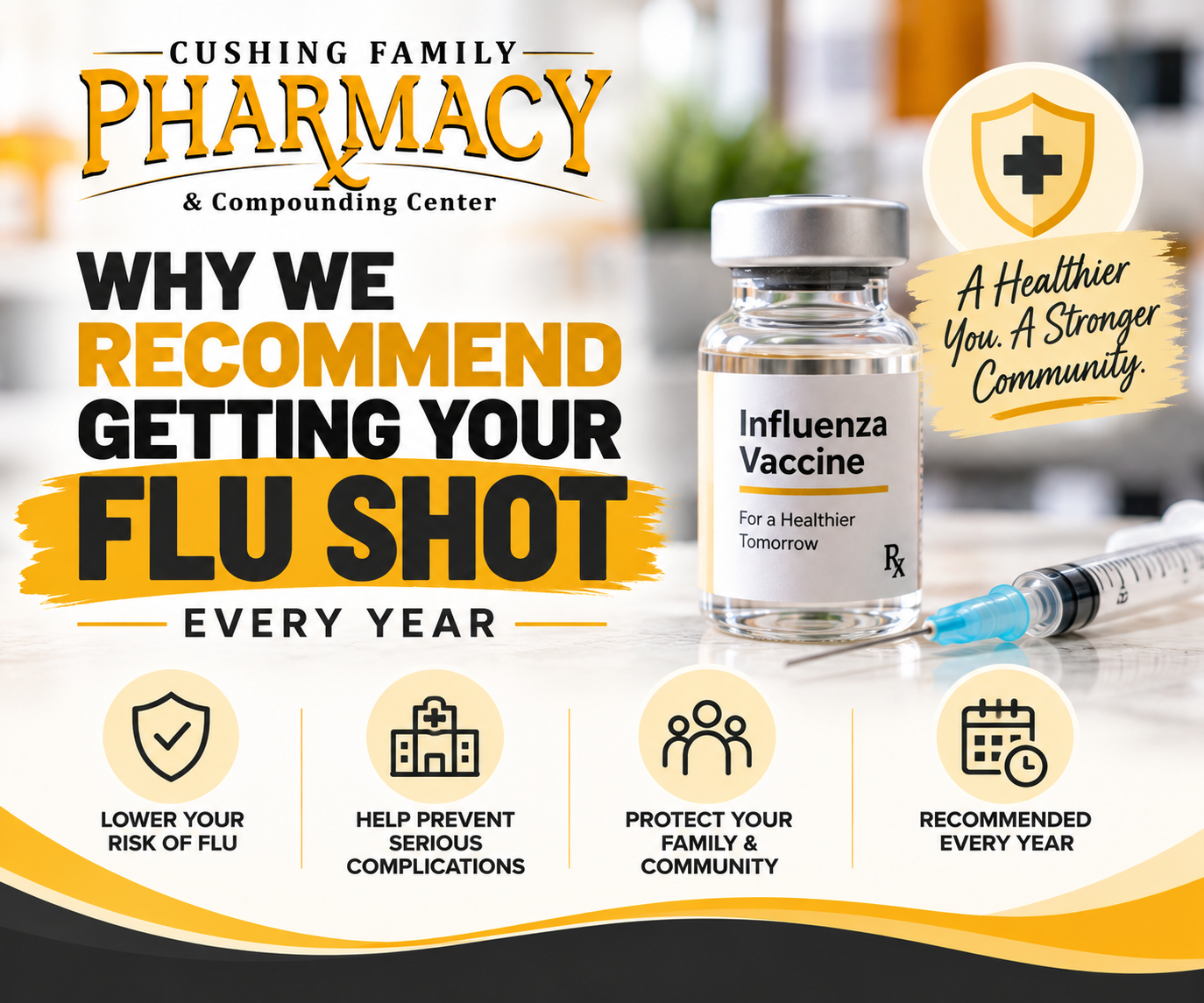
At Cushing Family Pharmacy, annual flu vaccination is one of the simplest preventive health steps we recommend each fall. The flu vaccine can reduce your risk of influenza and serious complications and reducing your chances of getting sick may also help reduce opportunities for the virus to spread to the people around you.
Here’s why getting vaccinated each year matters.
Lower Your Risk of Flu and Serious Illness
No vaccine can guarantee that you won’t get sick. Flu viruses change, and vaccine effectiveness can vary from season to season.
However, getting vaccinated can reduce your risk of getting influenza. And if you do get the flu after vaccination, being vaccinated may reduce your risk of severe illness and serious complications.
That’s important because influenza isn’t always just a few miserable days at home.
Help Reduce Your Risk of Hospitalization
For some people, influenza can become serious enough to require medical care or hospitalization.
Flu vaccination has been associated with a lower risk of flu-related hospitalization and severe outcomes, making vaccination particularly important for people who have a greater risk of complications.
Those at increased risk can include:
- Young children
- Adults age 65 and older
- Pregnant women
- People with weakened immune systems
- People with certain chronic health conditions
Even healthy people can develop influenza and experience complications, which is one reason flu vaccination is recommended so broadly.
Flu Can Be Especially Hard on People With Chronic Conditions
If you’re living with a chronic health condition, preventing influenza, or reducing your likelihood of severe illness, can be especially important.
The flu can sometimes worsen existing health problems, including conditions such as:
- Asthma
- COPD
- Diabetes
- Heart disease
If you’re unsure whether one of your medical conditions puts you at greater risk from influenza, ask your pharmacist or healthcare provider.
That’s also a good opportunity to make sure you’re up to date on other vaccines that may be recommended based on your age and health history.
Protecting Yourself Can Help Protect Others
Getting vaccinated is primarily about protecting your own health, but the benefits don’t necessarily stop with you.
Reducing your chances of getting influenza can also reduce opportunities for the virus to spread to other people.
That can be especially important when you’re around people who may be more vulnerable to serious illness, including older adults, young children, people with weakened immune systems, and people with certain chronic health conditions.
Getting your flu shot is one small step you can take for yourself and your community.
Why Do I Need a Flu Shot Every Year?
If you received a flu shot last year, you may wonder why you need another one.
There are two major reasons.
First, flu viruses change over time. Flu vaccines are reviewed each year and updated as needed based on the influenza viruses expected to circulate.
Second, protection from vaccination decreases over time.
That’s why flu vaccination isn’t considered a one-and-done vaccine. It’s recommended each flu season.
Who Should Get a Flu Shot?
Annual flu vaccination is recommended for nearly everyone 6 months of age and older, with rare exceptions.
The specific vaccine that’s appropriate for you can depend on factors such as your:
- Age
- Health history
- Pregnancy status
- Previous reactions to vaccines
- Other individual health considerations
Adults age 65 and older, for example, have certain flu vaccine options that are preferentially recommended for their age group.
Not sure which flu vaccine is right for you? Ask us. Our pharmacy team can help answer your questions.
Can the Flu Shot Give Me the Flu?
No. A flu shot cannot give you influenza.
Some people may experience temporary soreness where the vaccine was given, fatigue, headache, muscle aches, or a low-grade fever afterward. These effects are generally mild and short lived.
It’s also important to remember that protection isn’t immediate. It typically takes about two weeks after vaccination for your body to develop its immune response.
When Should I Get My Flu Shot?
For most adults, September and October are generally good times to receive a flu vaccine.
But if those months have already passed and you haven’t been vaccinated, don’t assume it’s too late. Vaccination can still provide benefits later in the season while influenza viruses are circulating.
The important thing is not to wait until flu is already spreading through your family, workplace, school, or community before thinking about getting vaccinated.
Get Ready for Flu Season at Cushing Family Pharmacy
Flu season comes around every year. Fortunately, so does one of the simplest things you can do to prepare for it.
If you’re due for your annual flu shot, stop by Cushing Family Pharmacy. And if you have questions about the vaccine, your health conditions, medications, or which flu vaccine is appropriate for you, talk with one of our pharmacists.
We’ll help you get ready for flu season before flu season gets to you.
This article is for general educational purposes and is not a substitute for individualized medical advice. Talk with your pharmacist, physician, or other healthcare professional about vaccination recommendations specific to you.