
If you’ve been scrolling through social media lately, chances are you’ve heard about berberine.
This naturally occurring plant compound has been getting a lot of attention for its potential effects on blood sugar, metabolism, and even weight loss. Some people have gone as far as calling it “Nature’s Ozempic.”
But is berberine really a weight-loss miracle? And does the research support all the attention it’s receiving?
Let’s take a closer look at what berberine is, how it works, what the research says, and whether it might be worth discussing with your pharmacist.
What Is Berberine?
Berberine is a naturally occurring compound found in several plants, including barberry and goldenseal. It has a long history of use in traditional medicine and is now being studied for its potential effects on metabolic health.
Researchers believe berberine may influence several metabolic pathways, including one involving an enzyme called AMPK (adenosine monophosphate-activated protein kinase).
Think of AMPK as one of your body’s metabolic switches. It helps regulate how cells use energy and plays a role in processes involving glucose and fat metabolism.
While these effects are promising in laboratory research, scientists are still studying how they translate into meaningful health benefits for people.
Can Berberine Actually Help with Weight Loss?
The short answer is: Possibly, but don’t expect dramatic results.
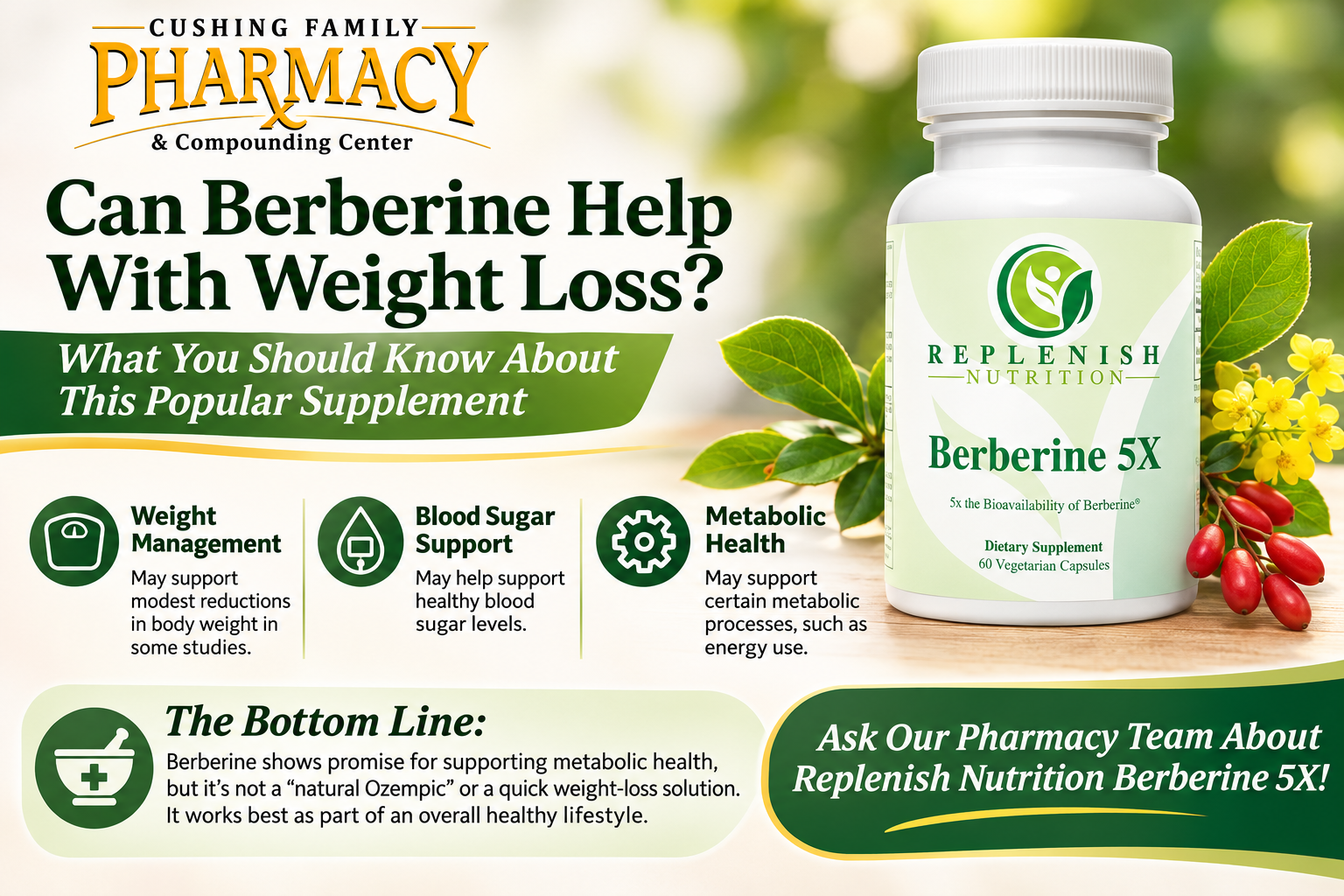
Some small studies suggest berberine may contribute to modest reductions in body weight or waist circumference. However, the research is limited, study results have been inconsistent, and larger, high-quality clinical trials are needed.
Much of the interest in berberine comes from research examining its potential effects on metabolic health.
Areas researchers are investigating include:
- Blood Sugar Regulation: Some studies suggest berberine may help improve certain blood glucose measurements and insulin sensitivity, particularly in people with metabolic health concerns.
- Metabolic Function: Berberine may influence pathways involved in how the body processes and uses energy.
- Cholesterol and Triglycerides: Some research has found improvements in certain blood lipid measurements, although additional studies are needed to better understand its effectiveness and long-term safety.
These findings are interesting, but they don’t mean berberine is a proven weight-loss treatment.
Berberine is not a magic solution for losing weight. Healthy eating habits, regular physical activity, adequate sleep, and other sustainable lifestyle choices remain important parts of weight management.
Is Berberine Really “Nature’s Ozempic”?
You’ve probably seen this comparison online, but let’s clear something up!
Although berberine and prescription medications such as Ozempic are sometimes discussed together because of their effects on metabolic health, they are not the same thing.
Ozempic contains semaglutide, a prescription medication that acts on GLP-1 receptors and is approved for specific medical uses, including blood sugar management in adults with type 2 diabetes.
Wegovy, another semaglutide product, is approved for chronic weight management in eligible patients.
Berberine is a dietary supplement. It does not work as a GLP-1 receptor agonist, and there is no convincing evidence that it produces weight-loss results comparable to these prescription medications.
Calling berberine “Nature’s Ozempic” can create unrealistic expectations about what the supplement can actually accomplish.
While berberine is being studied for potential metabolic benefits, it should never be considered a replacement for prescribed diabetes medications or medically supervised weight-management treatments.
How Much Berberine Should You Take?
If you’re considering berberine, it’s important to understand that there is no universally established, clinically proven dose for weight loss.
Clinical studies have evaluated different amounts of berberine, often using divided daily doses. However, supplement formulations can vary significantly, and the amount used in one study may not be appropriate for every product or individual.
Some formulations are designed to improve berberine absorption, which can further complicate comparisons between products.
Before beginning berberine, speak with your pharmacist or healthcare provider about whether it is appropriate for you.
Always follow the directions for your specific product and avoid increasing the amount without professional guidance.
Are There Any Side Effects?
Like any supplement, berberine isn’t right for everyone.
Some of the more common side effects involve the digestive system and may include:
- Diarrhea
- Constipation
- Gas and bloating
- Stomach cramping or discomfort
- Nausea
Digestive side effects may be more noticeable when first taking berberine or when using larger amounts.
If you experience persistent or uncomfortable side effects, speak with your pharmacist or healthcare provider.
Medication Interactions Matter!
This is especially important if you take prescription medications.
Berberine may affect certain enzymes and transporters involved in how medications are processed in the body. Depending on the medication, this could change how much of the drug is present in your bloodstream.
Some medications that deserve particular attention include:
- Diabetes Medications: Berberine may lower blood glucose, potentially increasing the risk of low blood sugar when combined with certain diabetes treatments.
- Blood Thinners: Potential interactions may affect medication safety and require professional evaluation.
- Blood Pressure Medications: Berberine may have blood-pressure-lowering effects, so combining it with certain medications could require additional monitoring.
- Certain Cholesterol Medications: Some statins and other medications may be affected by changes in drug metabolism.
- Immunosuppressant Medications: Drugs such as cyclosporine may have clinically important interactions with berberine.
Not every medication within these categories interacts with berberine in the same way. The risk depends on the specific drug, dose, and individual patient.
Always speak with your pharmacist or healthcare provider before starting berberine, especially if you take daily prescription medications.
Berberine should also be avoided during pregnancy and breastfeeding and should not be given to infants.
Getting the Most Out of Your Wellness Routine
If your healthcare provider determines berberine is appropriate for you, remember that supplements work best as part of a broader approach to health.
A few healthy habits can help support your overall wellness goals:
- Focus on Nutrition: Build balanced meals that include protein, fiber, healthy fats, fruits, and vegetables.
- Stay Active: Regular physical activity supports metabolic health, cardiovascular health, and overall well-being.
- Prioritize Sleep: Getting adequate sleep plays an important role in your body’s metabolic processes.
- Stay Hydrated: Drinking enough water helps support normal body functions.
- Manage Stress: Finding healthy ways to manage stress can benefit your physical and emotional well-being.
- Be Consistent: Sustainable lifestyle changes are generally more beneficial than relying on quick fixes.
Remember, supplements are meant to complement healthy habits, not replace them!
Cushing Family Pharmacy Spotlight: Replenish Nutrition Berberine 5X
At Cushing Family Pharmacy, we believe in helping our patients make informed decisions about their health and wellness.
That’s why we’re happy to introduce patients to Replenish Nutrition Berberine 5X, a dietary supplement available through our pharmacy.
Berberine 5X is formulated with a focus on berberine bioavailability, or how much of an ingredient becomes available for the body to absorb and use.
Because supplement formulations can differ, it’s important to understand that research involving standard berberine products may not directly apply to every specialized formulation.
Our pharmacy team can help you learn more about Berberine 5X, review the available research, discuss potential side effects and medication interactions, and determine whether it may be appropriate for your individual needs.
Interested in learning more about Berberine 5X?
Stop by Cushing Family Pharmacy and talk with our team! We’re happy to answer your questions, review your current medications, and help you make informed decisions about your supplement options.
Your health is about more than a number on the scale. It’s about supporting your body, building healthy habits, and feeling your best!