
As temperatures drop and respiratory viruses begin circulating more widely, fall and winter can require a little extra planning for people who are immunocompromised.
A weakened immune system can make it harder for the body to fight certain infections and may increase the risk of serious illness. But being immunocompromised doesn’t mean you have to spend the entire season worried about getting sick.
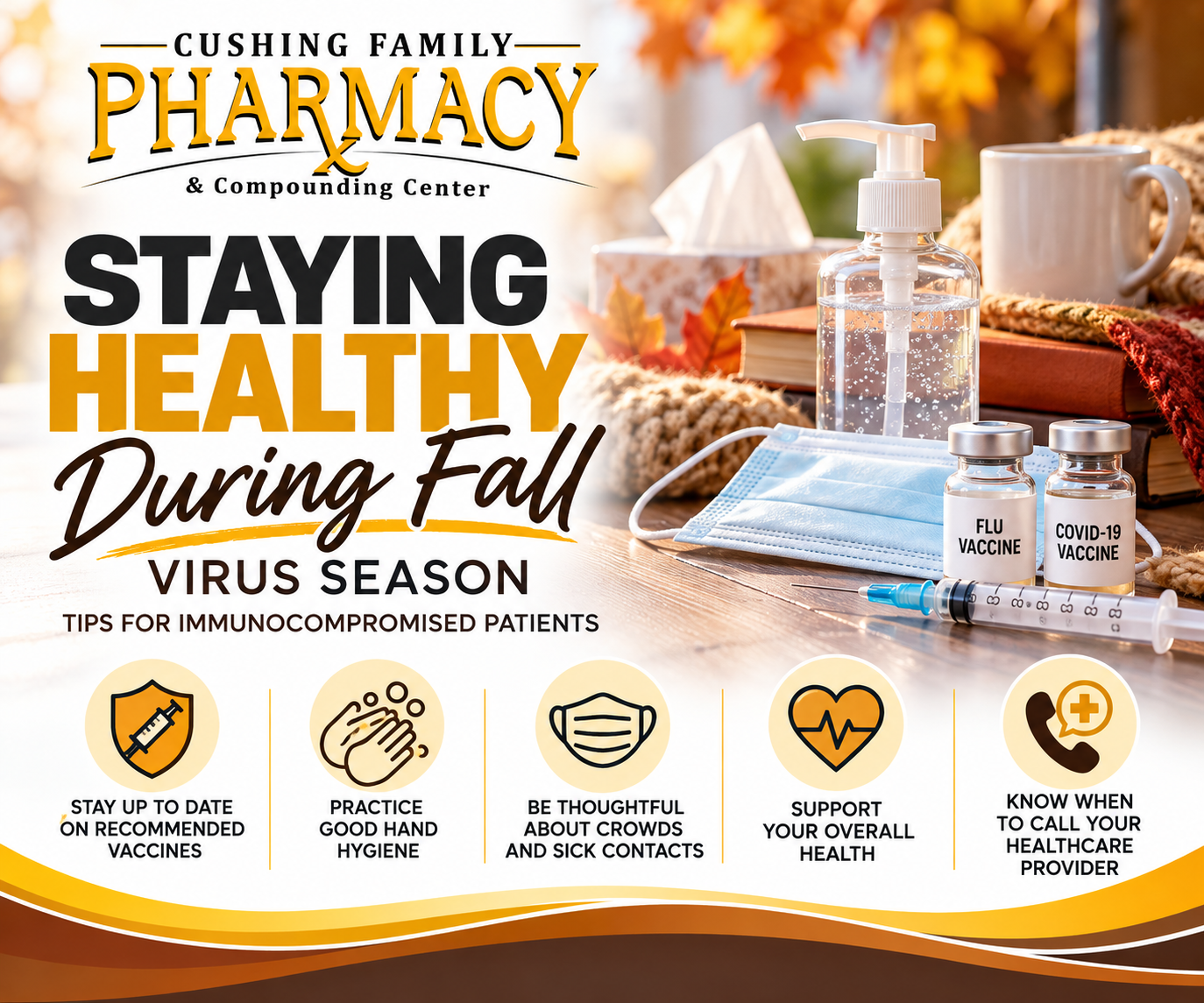
At Cushing Family Pharmacy, we want our patients and their families to feel prepared. Prevention matters, but so does knowing what precautions make sense for you, and having a plan if you do become sick.
1. Stay Up to Date on Recommended Vaccines
Vaccination is one of the most important tools available to help protect against serious respiratory illness.
People who are moderately or severely immunocompromised may have different vaccination recommendations based on their age, health conditions, medications, previous vaccinations, and other factors.
Your healthcare provider or pharmacist can help you determine which vaccines are appropriate for you. These may include:
- Annual flu vaccine
- COVID-19 vaccine
- RSV vaccine
- Pneumococcal vaccine
- Shingles vaccine
For most adults, September and October are generally good times to receive the annual flu vaccine, although getting vaccinated later can still be beneficial while influenza viruses are circulating.
Your vaccine schedule may look different from someone else’s, so ask rather than assume.
2. Some Vaccines Require Special Consideration
If you’re immunocompromised, it’s especially important to tell your pharmacist or healthcare provider about your medical conditions and medications before receiving a vaccine.
Certain live vaccines may not be appropriate for people with some types of immunocompromise. For example, the live attenuated influenza vaccine given as a nasal spray is not recommended for people with weakened immune systems.
That doesn’t mean you should automatically avoid vaccines. The appropriate vaccine, and sometimes its timing, can depend on your condition, medications, treatments, and degree of immune suppression.
Your family members should generally stay up to date on their recommended vaccinations as well. If you have questions about vaccines for yourself or someone in your household, ask your healthcare provider or pharmacist.
3. Make Hand Hygiene Part of Your Routine
Simple everyday habits can help reduce your exposure to germs throughout respiratory virus season.
Make a habit of:
- Washing your hands regularly with soap and water for at least 20 seconds
- Washing your hands before eating or preparing food
- Avoiding touching your eyes, nose, and mouth with unwashed hands
- Keeping hand sanitizer available when soap and water aren’t convenient
- Avoiding sharing drinks, utensils, and other personal items
Because many respiratory viruses spread through the air, ventilation matters too. When practical, opening windows, improving airflow, or choosing outdoor activities instead of crowded indoor spaces may help reduce exposure.
4. Be Thoughtful About Crowds and Sick Contacts
When respiratory viruses are circulating heavily, you may want to take additional precautions in crowded or poorly ventilated indoor spaces.
A well-fitting, high-quality mask can provide an additional layer of protection, particularly in crowded indoor settings.
It’s also a good idea to avoid close contact with people who are sick. If someone has a cough, fever, sore throat, congestion, or other symptoms, or simply isn’t feeling well, giving yourself some extra distance can be worthwhile.
And don’t be afraid to communicate your needs.
Protecting your health may sometimes mean skipping a gathering, wearing a mask, or asking a sick friend or family member to visit another time.
5. Support Your Overall Health
Healthy habits won’t replace vaccines or medical treatment, but they remain an important part of taking care of yourself.
Eat a Balanced Diet
Try to include a variety of fruits, vegetables, whole grains, lean proteins, and other nutrient-rich foods. A balanced diet provides nutrients your body needs to function properly.
Prioritize Sleep
Most adults generally need about 7–9 hours of sleep per night, although individual needs vary. A consistent sleep schedule can help support your overall health and well-being.
Manage Stress
Fall and winter can get busy. Make time for activities that help you unwind, whether that’s reading, listening to music, spending time outdoors, enjoying a hobby, or visiting with family and friends.
Be Careful With Supplements
Before adding an “immune support” vitamin, supplement, or herbal product, ask your pharmacist.
Supplements can interact with medications, and certain products may not be appropriate with some medical conditions or treatments. “Natural” doesn’t automatically mean safe for everyone.
6. If You Get Sick, Don’t Wait Too Long to Call
This is especially important for someone who is immunocompromised.
If you develop symptoms of flu, COVID-19, or another respiratory illness, contact your healthcare provider promptly.
Testing and treatment may be appropriate, and some antiviral medications work best when they’re started soon after symptoms begin.
Don’t assume you need to wait several days to see if you get better.
Your healthcare provider can help determine whether you need testing, treatment, or additional medical care based on your symptoms and individual risk factors.
Seek emergency medical attention for severe symptoms such as difficulty breathing, persistent chest pain or pressure, new confusion, inability to stay awake, or other symptoms that concern you.
7. Make a Plan Before You Need It
One of the best things you can do this fall is have a plan before you become sick.
Know:
- Who you’ll call if symptoms begin
- Where you can get flu or COVID-19 testing
- Which medications you’re currently taking
- Which medications affect your immune system
- Which OTC medications are safe with your prescriptions
- Whether you’re up to date on recommended vaccines
- Whether you have enough of your regular medications on hand
The middle of a fever isn’t the best time to figure all of this out.
A little preparation now can make things much easier if illness does make its way into your household.
Your Health Is Worth the Extra Protection
Being immunocompromised doesn’t mean you have to spend the entire fall and winter worried about getting sick. It means knowing your risks, taking reasonable precautions, and having a plan if you do become sick.
At Cushing Family Pharmacy, we’re here to help you understand your medications, review your vaccination needs, and answer questions about OTC medications and supplements throughout respiratory virus season.
Stop by or give us a call. A little preparation now can make respiratory virus season easier to navigate.
This article is for general educational purposes and is not a substitute for individualized medical advice. Vaccine recommendations and treatment decisions may vary based on age, medical history, medications, and degree of immunocompromise. Talk with your pharmacist or healthcare provider about what’s appropriate for you.