
Medications are an important part of staying healthy, but proper storage is just as important as taking them correctly.
How and where you store your medications can help protect their quality, prevent accidental poisoning or misuse, and reduce medication mix-ups.
Fortunately, medication safety at home doesn’t have to be complicated. A few simple habits can make a big difference.
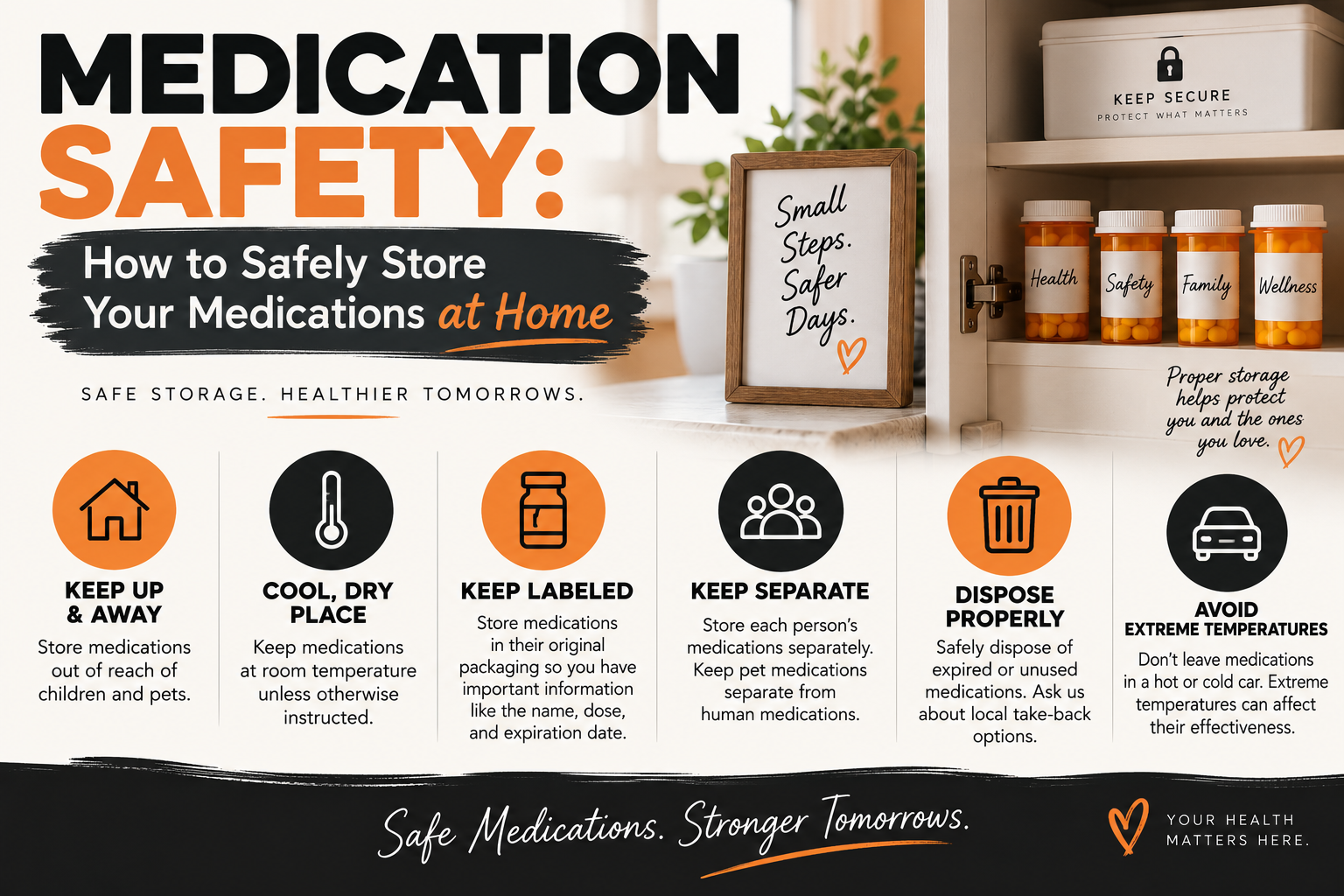
Keep Medications Up, Away & Out of Reach
One of the most important medication-safety rules is to keep medications up and away, out of the reach and sight of children and pets.
Store medications in a high cabinet, drawer, or closet where children and pets cannot easily see or reach them. For medications that could be misused, stolen, or accidentally taken by someone else, consider a locked cabinet, medication lockbox, or locking bag.
Remember that visitors, older children, and teenagers may also have access to medications in your home.
And don’t assume a child-resistant cap means childproof. Safety caps provide an additional layer of protection, but medications should still be stored securely and out of reach.
Choose the Right Storage Environment
Most medications should be stored at room temperature in a cool, dry place unless the medication label or your pharmacist gives you different instructions.
Heat, moisture, and light can affect certain medications.
Good storage locations may include a bedroom cabinet, closet shelf, or another secure area away from excessive heat and humidity.
What About the Bathroom Medicine Cabinet?
Despite its name, the bathroom medicine cabinet isn’t always the best place for medications. Heat and humidity from showers and baths may make the bathroom unsuitable for certain products.
You should also avoid storing medications near the kitchen stove, oven, sink, direct sunlight, or other sources of excessive heat and moisture.
Always follow the storage instructions for your specific medication.
What About Medications That Need Refrigeration?
Some medications require refrigeration, but don’t automatically put a medication in the refrigerator unless its storage instructions tell you to.
For medications that do require refrigeration, follow the label carefully and avoid storing them where they may accidentally freeze.
And accidents happen. Maybe you left a refrigerated medication on the counter overnight or accidentally left a prescription in the car.
Don’t automatically assume it’s ruined or that it’s still okay to use.
Call Cushing Family Pharmacy and let us know what happened. We can help determine the appropriate next step based on the specific medication and how it was stored.
Don’t Leave Medications in a Hot Car
Oklahoma temperatures can heat up a vehicle quickly.
Avoid leaving medications in your car for extended periods, particularly during very hot or cold weather. Extreme temperatures can affect certain medications and products.
If you’re concerned that a medication was exposed to excessive heat or cold, ask us before using it.
Keep Medications Properly Labeled and Organized
Keeping medications in their original labeled containers can make it easier to identify exactly what you’re taking and access important information such as the medication name, strength, directions, pharmacy information, and expiration date.
If you intentionally use a pill organizer, pharmacy-prepared adherence packaging, or another medication-management system, make sure you still have a reliable way to identify your medications and access their instructions.
Pill organizers can be a great tool, the goal is simply to have a system that works safely for you.
Keep Everyone’s Medications Separate
If multiple people or pets in your household take medications, keep them clearly separated.
Organizing each person’s medications in distinct locations or labeled containers can help prevent accidental mix-ups.
Pet medications should also be stored separately from human medications.
A few extra minutes of organization can help prevent potentially serious mistakes.
Clear Out Medications You No Longer Need
Take some time periodically to check for expired, discontinued, or unused medications.
Instead of allowing them to accumulate in a drawer or cabinet, use an appropriate medication take-back or disposal option when available. Disposal recommendations can vary depending on the medication, so ask Cushing Family Pharmacy about appropriate disposal options in your area.
Before disposing of empty prescription containers, it’s also a good idea to remove or obscure personal information on the label.
Need a Simpler Way to Organize Your Medications?
If you take several medications, keeping track of multiple bottles, refill dates, and dosing schedules can get complicated quickly.
That’s where we can help.
Talk with the team at Cushing Family Pharmacy about medication organization and packaging options that may work for you. We can help make managing your medications simpler and more convenient while helping you stay on track with your daily routine.
Medication Safety Starts at Home
Proper medication storage doesn’t have to be complicated. Remember these five simple tips:
- Keep medications UP and AWAY.
- Store them in a COOL, DRY place unless instructed otherwise.
- Keep medications properly LABELED and ORGANIZED.
- Keep different people’s medications SEPARATE.
- Safely DISPOSE of medications you no longer need.
A little organization today can go a long way toward keeping your medications, and your family, safe.
If you have questions about how to store, organize, or dispose of a medication, ask the team at Cushing Family Pharmacy. We’re always happy to help.